In a world where even your toaster can connect to the internet, it’s no surprise that factories are getting a high-tech makeover. Enter the smart factory—a place where machines chat, data dances, and productivity skyrockets. Imagine a factory floor that runs itself, optimizing processes faster than you can say “robot overlords.”
Overview of Smart Factories
Smart factories exemplify the integration of advanced technologies within manufacturing environments. They utilize the Internet of Things (IoT) to connect various machines, allowing for real-time data exchange. Data analytics play a crucial role in monitoring performance, identifying inefficiencies, and improving processes.
Automation enhances productivity significantly in these factories. Robots handle repetitive tasks, freeing human workers for more complex responsibilities. Machine learning algorithms analyze operational data, leading to informed decision-making and better resource allocation.
Connectivity among devices enables predictive maintenance, reducing downtime and minimizing operational disruptions. Sensor technology monitors equipment health and performance, generating alerts before failures occur. Smart factories also employ digital twins, which create virtual models of physical assets for simulation and analysis.
Sustainability remains a key focus in smart factories. Energy-efficient technologies contribute to lower resource consumption, while optimized production processes reduce waste. Innovations such as 3D printing and additive manufacturing allow for greater design flexibility and reduced material use.
Collaborative robots, or cobots, work alongside human operators, enhancing production capabilities. These machines adapt to various tasks and assist with heavy lifting and precision work. By combining human intuition with machine reliability, smart factories achieve higher efficiency and quality.
Emerging technologies such as artificial intelligence and blockchain are further reshaping manufacturing operations. AI enables advanced analytics and improves forecasting accuracy, while blockchain enhances supply chain transparency and security. As these technologies evolve, smart factories will continue to redefine the landscape of modern manufacturing.
Key Technologies in Smart Factories
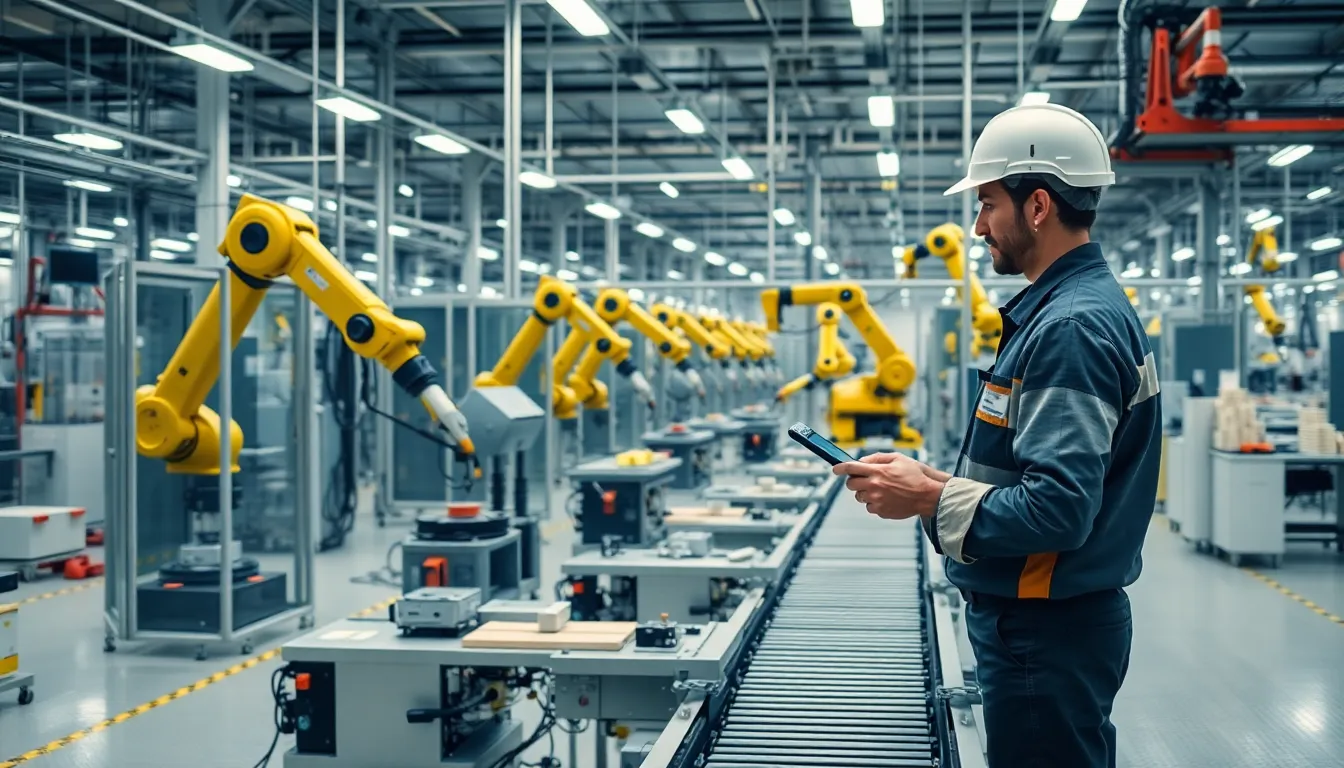
Smart factories employ advanced technologies that streamline operations and enhance productivity.
Internet of Things (IoT)
IoT connects machines, sensors, and devices throughout smart factories. Real-time data exchange occurs as equipment communicates, sharing crucial operational insights. Data collection improves visibility into processes, enabling quicker responses to issues. This connectivity allows for smarter decision-making based on predictive analytics. Enhanced monitoring reduces maintenance costs through early fault detection. The integration of IoT also boosts efficiency by optimizing resource allocation. It creates a seamless flow of information, fostering collaboration among different manufacturing components.
Artificial Intelligence (AI)
AI plays a transformative role in smart factories, analyzing vast amounts of data for improved decision-making. Machine learning algorithms identify patterns, allowing the factory to adapt to changing conditions. Predictive analytics provided by AI helps anticipate equipment failures, minimizing downtime. Automation is enhanced, as AI-driven robots perform complex tasks that require flexibility. Processes become more efficient with AI’s ability to optimize production schedules based on real-time demand. Companies leveraging AI can achieve higher accuracy in forecasting, ultimately improving productivity and operational resilience.
Benefits of Implementing Smart Factories
Smart factories deliver numerous benefits that significantly impact manufacturing processes. These include increased efficiency and enhanced flexibility.
Increased Efficiency
Smart factories optimize operations through automation and real-time data utilization. Productivity rises as machines communicate and coordinate tasks effectively. Using IoT technologies enhances operational visibility, allowing for timely interventions. Robots handle repetitive tasks, freeing human workers for more skilled responsibilities. Predictive maintenance reduces unexpected downtime, ensuring equipment is operational when needed. Streamlined workflows minimize waste and enhance resource usage. Data analytics identify inefficiencies, providing insights into performance improvements. Overall, these elements contribute to a more efficient manufacturing environment.
Enhanced Flexibility
Flexibility is a hallmark of smart factories, allowing manufacturers to adapt swiftly to market demands. Modular production lines enable quick reconfiguration around changing requirements. Real-time data access supports immediate adjustments in processes and schedules. This adaptability fosters customization, accommodating specific customer needs without significant delays. Collaborative robots work alongside human operators, increasing workforce versatility. Advanced forecasting techniques improve response to supply chain fluctuations. As a result, smart factories cultivate a more resilient manufacturing environment capable of navigating dynamic market conditions.
Challenges in Smart Factory Adoption
Smart factories face significant challenges in their adoption despite the advantages they offer. These challenges include high initial costs and cybersecurity risks, which can inhibit the transition to advanced manufacturing.
High Initial Costs
High initial costs pose a major obstacle for many manufacturers. Setting up smart factory infrastructure involves significant investments in technology and equipment. This costly setup includes IoT devices, advanced machinery, and software systems for data analytics. Manufacturers often hesitate to divert funds from existing operations to cover these expenses. While the potential for long-term savings exists, immediate financial impact frequently causes delay in adoption. In sectors with tighter budgets, the burden of high initial costs prevents many companies from embracing smart technologies.
Cybersecurity Risks
Cybersecurity risks represent another critical challenge in smart factory implementation. As factories increasingly rely on interconnected devices, the threat of cyberattacks grows. Hackers can exploit vulnerabilities in IoT connected systems, leading to data breaches or disruption of operations. Businesses must prioritize investing in robust security measures to safeguard sensitive information and operations. Implementing cybersecurity protocols can add complexities during the adoption process. Both equipment manufacturers and software providers play essential roles in creating secure systems, emphasizing the industry-wide need for vigilance in protecting smart factories.
Future Trends in Smart Factories
Emerging trends in smart factories illustrate the ongoing evolution of manufacturing environments. Innovative technologies reshape production processes, driving efficiency and responsiveness.
Integration of Advanced Robotics
Advanced robotics play a vital role in smart factories. Robots enhance operational efficiency by performing intricate tasks with precision. They work alongside humans, significantly improving productivity and safety standards. Collaborative robots, or cobots, adjust to human movements, allowing for seamless cooperation on the factory floor. Increased use of AI enables robots to learn from their environments, further enhancing their capabilities for real-time decision-making. Another trend includes mobile robotics that navigate autonomously, streamlining material transport. Notably, integrating advanced robotics fosters increased flexibility and adaptability in production systems, essential for meeting diverse market demands.
Sustainability Initiatives
Sustainability initiatives gain prominence in the evolution of smart factories. Energy-efficient technologies contribute to significant resource conservation and reduced waste generation. Smart factories utilize renewable energy sources to power operations, minimizing their carbon footprint. Implementing circular economy principles encourages recycling and reusing materials throughout the manufacturing process. Real-time data analytics aid in optimizing energy consumption, identifying inefficiencies, and driving continuous improvement. Companies increasingly focus on sustainable supply chains, ensuring responsible sourcing of materials. Prioritizing sustainability not only enhances corporate responsibility but also meets growing consumer demand for environmentally friendly products, ensuring competitive advantage in the market.
Conclusion
Smart factories represent a significant leap in manufacturing efficiency and adaptability. By harnessing advanced technologies like IoT and AI, these environments not only boost productivity but also enhance sustainability efforts. The integration of automation and real-time data analytics empowers manufacturers to respond swiftly to market demands while minimizing waste.
Despite the challenges posed by high costs and cybersecurity concerns, the benefits of transitioning to smart factories are undeniable. As technology continues to evolve, the potential for innovation in manufacturing grows, paving the way for a future that’s not only more efficient but also more environmentally responsible. Embracing these changes will be crucial for manufacturers aiming to thrive in an increasingly competitive landscape.